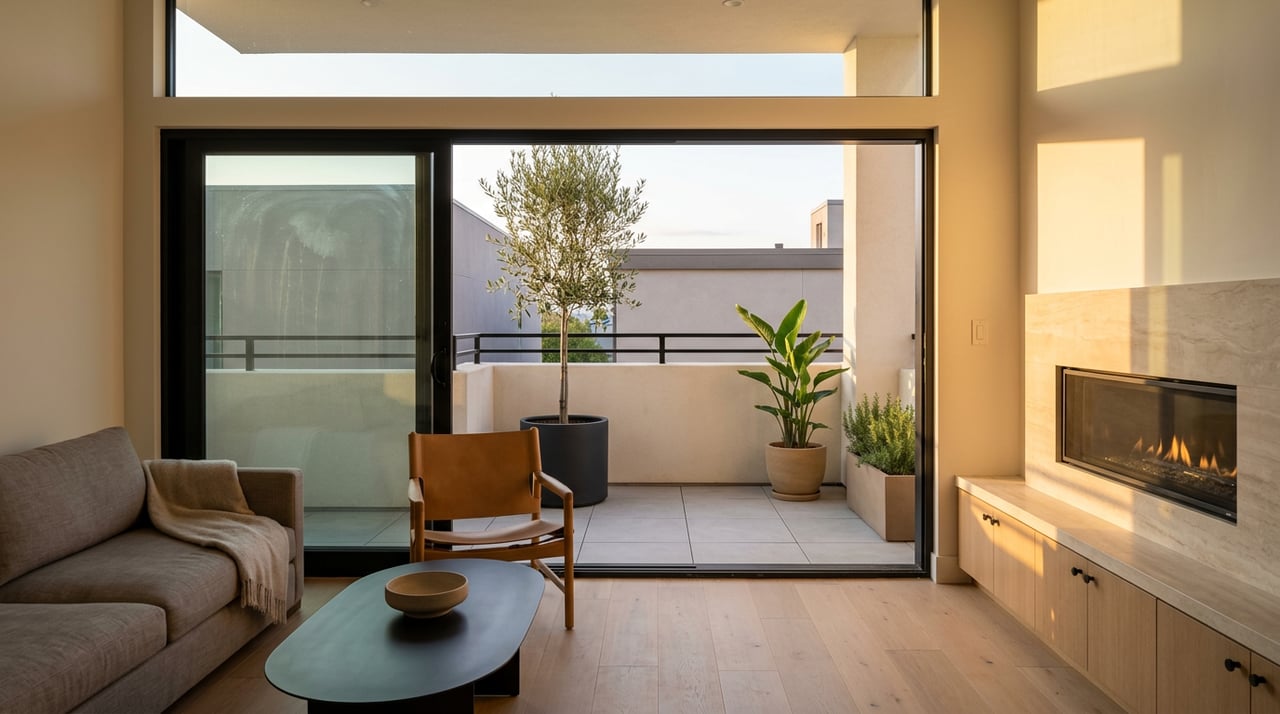
Craving an easy, beach-close base you can lock and leave without worrying about upkeep? If you live in Calabasas or the West Valley, a Santa Monica pied-à-terre can put the ocean, dining and workweek meetings within minutes. In this guide, you’ll learn where to look, how to size your budget, what HOA and city rules mean for rentals, and how parking and permits work. Let’s dive in.
What makes a great pied-à-terre
A true pied-à-terre is low maintenance, secure and convenient. You want the right mix of location, services and predictable costs.
- Parking matters. If you often drive in from the Valley, prioritize deeded or assigned garage parking and easy access to the 10 or PCH.
- HOA services and reserves. Decide how much you value on-site services like concierge, valet or a gym, and review the building’s reserves and dues.
- Rental flexibility. If you plan to rent the unit when you are away, understand city rules and HOA limits before you write an offer.
Where to look: micro-neighborhoods and buildings
Santa Monica is compact, but each pocket feels different and can change price, parking and HOA structure.
Downtown and Ocean Avenue (90401–90402)
Expect luxury oceanfront towers and full-service buildings with concierge and valet. You pay a premium for ocean and mountain views plus on-site amenities. It is ideal if you want immediate beach access and a staffed building. See recent activity for the area around the Promenade and Ocean Avenue on neighborhood pages such as Downtown Santa Monica.
Wilshire–Montana and North of Montana (90402)
You will find boutique condo buildings and townhomes near Montana Avenue’s shops and cafes. Streets feel more residential, with smaller communities that often have lower dues than full-service towers. Explore options around this area using North of Montana.
Ocean Park and Main Street (90405)
This pocket blends low-rise walkups, newer boutique townhomes and a few mid-rises. You get local restaurants, an easy walk to the beach in some spots and a more laid-back vibe. For context, review listings and sales around Ocean Park.
Sunset Park and inland blocks (90404 and parts of 90403)
Quieter, more residential streets with a mix of condos and small multifamily buildings. Prices here are often more approachable than oceanfront. Inventory varies by block, so compare each building’s rules and parking.
Price bands and what your budget buys
A quick way to size your search is price per square foot. In many central condo segments in 2024–2025, Santa Monica has been trading around 900 to 1,100+ dollars per square foot. Top oceanfront units sell for more. Use current comps for the specific building you like. See the local trend snapshot at PropertyShark’s Santa Monica market page.
Here is how that math can look in practice:
- Small studio or efficient 1-bedroom (about 500 to 700 square feet): at 900 to 1,100 dollars per square foot, the math suggests roughly 450,000 to 770,000 dollars. In ocean-adjacent blocks, studios and 1-bedrooms commonly list around 700,000 to 1.2 million dollars depending on building and finishes.
- Typical 1-bedroom pied-à-terre (about 700 to 900 square feet): 630,000 to 990,000 dollars by the square-foot math, with many turnkey, walk-to-beach options listing closer to 900,000 to 1.6 million dollars based on amenities and location.
- 2-bedroom units (about 900 to 1,400 square feet): expect 1.0 to 2.5 million dollars in central neighborhoods, with premium oceanfront 2-bedrooms at 2 million dollars and higher.
- Luxury full-service units with views: often 2 to 7 million dollars or more depending on size and outlook.
HOA dues vary widely by building type. Boutique walkups can be a few hundred dollars a month. Full-service oceanfront towers often run into the low thousands, especially when utilities and valet are bundled. For example, oceanfront buildings like 201 Ocean Avenue have had listings with four-figure monthly dues, which is typical for full-service communities near the water. Review a live example on Realty.com.
Parking and permits: read this first
If you plan to arrive by car, confirm whether the unit comes with deeded or assigned parking, whether spaces are tandem and how guest parking works. City code sets off-street parking minimums by unit size and proximity to transit. Outside major transit stops, a studio typically requires 1 parking space per unit, about 1.5 spaces for a 1-bedroom and 2 spaces for a 2-bedroom. Minimums are lower within one half mile of a major transit stop. You can review the standards in Santa Monica’s municipal code Table 9.28.060 at the city’s code portal on ecode360.
Santa Monica also operates a Preferential Parking program for street parking. Resident permits require proof that the unit is your primary residence and that your vehicle is registered to that address. If this is a second home, you may not qualify for a resident permit. Plan to rely on deeded garage parking or limited visitor permits. For an overview of local logistics for new residents, see the city’s New to Santa Monica page.
Rental rules that shape your plan
Before you buy a pied-à-terre with plans to rent it when you are away, align three layers of rules: city regulations, the building’s HOA documents and California law.
City home-sharing vs vacation rentals
Santa Monica allows hosted “home-sharing” with a valid city license when the owner or primary occupant is on site for the stay. Unhosted, whole-unit vacation rentals remain broadly unlawful. Learn how home-sharing licenses work on the city’s How to apply for a home-share business license page.
Residential Leasing Requirements
Santa Monica’s Residential Leasing Requirements generally require rental housing to be leased to natural persons as their primary residence, with initial lease terms of at least one year, subject to narrow exemptions. This framework limits many mid-term strategies of 30 to 180 days for non-owner-occupied units. You can review the policy context in the city’s Housing Element appendix Residential Constraints document.
HOA CC&Rs and AB 3182
California’s AB 3182 (Civil Code section 4741) restricts how HOAs can limit rentals. Associations cannot set rental caps below 25 percent of the community and cannot ban rentals outright, but they may prohibit transient or short-term rentals of 30 days or less. Always read the CC&Rs and rules for minimum lease terms, caps and any waiting lists. See the statute text for details at California Legislative Information.
Putting it together: a common scenario is an owner who wants to rent the unit when not using it. You will need to confirm that short stays are not allowed under city rules, verify whether your HOA bans leases shorter than 30 days, and confirm whether one-year minimums apply under city requirements. Do not rely on past enforcement trends, because policies can change.
HOA diligence: reserves, insurance and fees
The strength of an HOA’s finances can save you from large special assessments later.
- Reserves and budgets. Under the Davis–Stirling Act, HOAs must prepare reserve studies at least every three years and provide annual reserve and budget disclosures. Ask for the most recent reserve study, current reserve balance, the last 12 to 24 months of meeting minutes and any litigation or special assessment history. Learn more about reserve study requirements at Davis–Stirling.
- Master insurance and your HO-6. Request the building’s master policy summary to see what the association insures and where your personal condo policy begins. Confirm the recommended HO-6 coverage, including loss assessment limits. For an overview of condo insurance basics, see Forbes Advisor’s condo insurance guide.
- Dues and services. Higher dues in full-service buildings can be worthwhile if you value valet, concierge and bundled utilities. In boutique buildings, lower dues may come with fewer amenities and more owner responsibility.
Closing costs: transfer tax at the high end
For luxury purchases, factor in Santa Monica’s Measure GS, which added an additional transfer tax tier for transactions at or above the city’s threshold when it took effect on March 1, 2023. If you are targeting a top-tier oceanfront property, confirm whether your price triggers this tax and who pays it in your deal structure. You can review the municipal transfer tax chapter on ecode360.
Step-by-step game plan for West Valley buyers
Use this roadmap to keep your search efficient and focused on lock-and-leave living.
- Define your use case. Weekday crash pad, weekend beach base or a mix. This guides location and building type.
- Shortlist neighborhoods. Compare Downtown and Ocean Avenue for services and views, Wilshire–Montana for boutique feel, Ocean Park for local scene and Sunset Park for value.
- Model monthly costs. Include HOA dues, utilities, insurance and parking or valet fees along with your mortgage. Use the price-per-square-foot benchmarks as a starting point and refine with live comps.
- Verify parking. Confirm deeded or assigned spaces, whether they are tandem, and guest parking policies. If you hoped to use street parking, check preferential permit eligibility.
- Read the documents. Review CC&Rs, rules, rental language and recent meeting minutes. Ask for the latest reserve study and budget.
- Align rental strategy. Confirm city home-sharing and Residential Leasing Requirements, then check AB 3182 and your HOA’s minimum lease terms.
- Evaluate building services. Look for security, package handling, on-site management and smart lock policies that support part-time occupancy.
- Plan closing costs. Ask your advisor to estimate city and county fees and whether Measure GS applies at your price point.
Sample monthly cost snapshots
These examples are for planning only and reflect typical Santa Monica ranges. Always replace with current comps and actual quotes.
- Entry 1-bedroom near the beach: purchase 900,000 to 1.2 million dollars. HOA often 400 to 800 dollars monthly in mid-rise buildings. Insurance is an HO-6 policy, and utilities vary by building.
- Mid-range 2-bedroom inland or near Montana: purchase 1.4 to 2.0 million dollars. HOA commonly 500 to 1,000 dollars monthly depending on amenities.
- Luxury oceanview residence in a full-service tower: purchase 2.5 to 5.0 million dollars or more. HOA often 1,000 to 1,700-plus dollars monthly, with possible valet fees bundled. Confirm if Measure GS affects closing costs.
Quick due diligence checklist
Before you commit, request and review the following for each target unit:
- Title and unit type. Confirm condominium, co-op, stock cooperative or townhouse. Different structures mean different obligations.
- CC&Rs and rules. Look for rental limits, guest and pet policies, and minimum lease terms. AB 3182 allows HOAs to ban rentals under 30 days and set caps not below 25 percent. See AB 3182.
- HOA financials. Get the current budget, most recent reserve study and reserve balance, minutes and any special assessment or litigation history. See reserve guidance at Davis–Stirling.
- Insurance. Request the master policy summary and confirm your HO-6 coverage and loss assessment limits. See a primer at Forbes Advisor.
- Parking. Verify deeded or assigned spaces, whether they are tandem, guest parking rules and if the block uses Preferential Parking. The city code is on ecode360.
- Rental plan. Align the city’s home-sharing rules with your HOA’s lease terms and the city’s Residential Leasing Requirements. Start with the city’s home-share license guide and the Residential Constraints document.
- Closing costs. Ask whether your price triggers Measure GS and how that affects negotiations. See transfer tax details.
A well-chosen Santa Monica pied-à-terre gives you an effortless coastal base with quick access to work and play. If you want a seasoned advisor to help you compare buildings, pressure-test HOA financials and navigate rental and parking rules, connect with Larry Calemine for a private consultation.
FAQs
Can I use a Santa Monica condo for Airbnb or short stays?
- Santa Monica generally allows hosted home-sharing with a city license but prohibits unhosted, whole-unit vacation rentals. Always confirm licensing and HOA rules. See the city’s home-share license page.
Do non-primary residents get a Santa Monica street parking permit?
- Resident permits typically require proof that the unit is your primary residence and that your vehicle is registered to that address. Second-home owners often rely on deeded parking or visitor permits. See New to Santa Monica.
How much are HOA dues in full-service buildings near the ocean?
- Dues in full-service oceanfront buildings often run from about 1,000 to 1,700-plus dollars per month when utilities and services are bundled. Review budgets and a live example like 201 Ocean Avenue.
What is AB 3182 and how does it affect leasing my unit?
- AB 3182 limits HOAs from unreasonably restricting rentals, sets a minimum rental cap of 25 percent and still allows HOAs to prohibit leases of 30 days or less. Read the statute at California Legislative Information.
Will I owe extra transfer tax if I buy a top-tier oceanfront condo?
- Transactions at or above Santa Monica’s Measure GS threshold are subject to an additional transfer tax tier. Confirm whether your price triggers it and who pays. See the city’s transfer tax chapter.