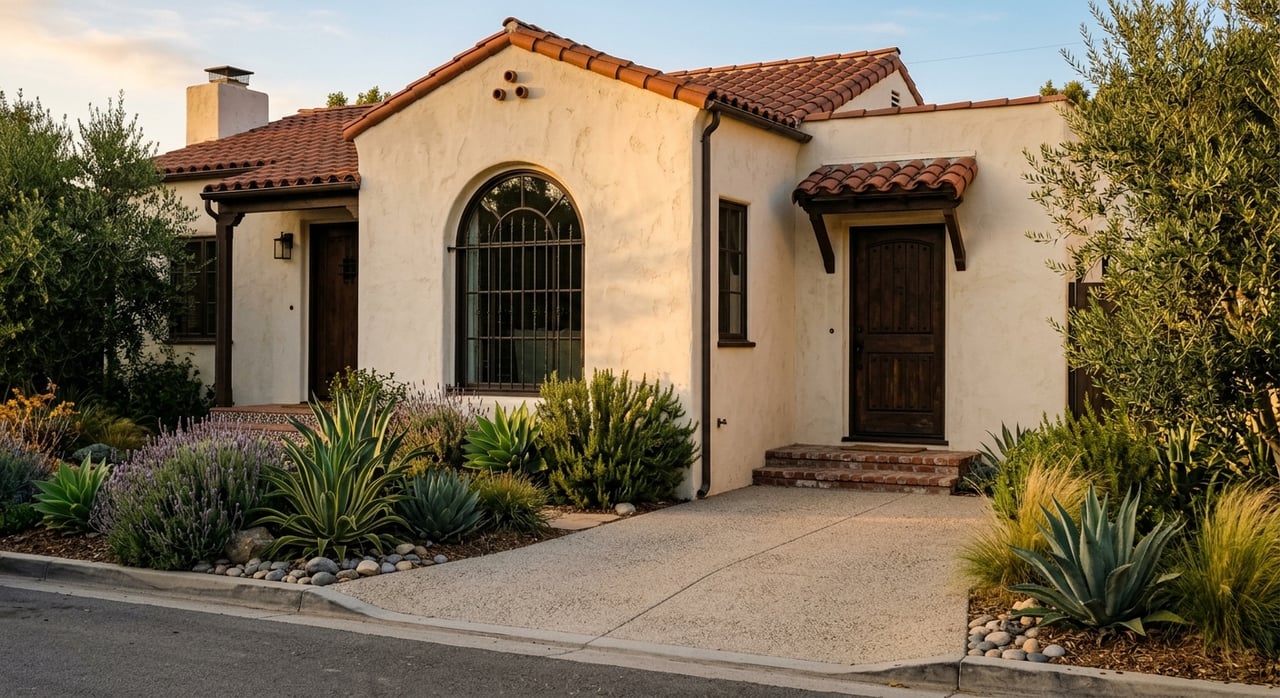
How to Evaluate Hollywood Short-Term Rental Potential
Wondering whether a Hollywood home can realistically work as a short-term rental? It is a smart question, especially in an area with year-round visitor appeal, strong transit access, and a name recognition few neighborhoods can match. But in Los Angeles, short-term rental potential is not just about location or style. It starts with compliance, then moves to property fit, operating costs, and realistic income planning. If you are weighing a purchase, evaluating an existing property, or comparing rental strategies, this guide will help you screen the opportunity more clearly. Let’s dive in.
If you are evaluating short-term rental potential in Hollywood, the first step is understanding what Los Angeles actually allows. In the city, short-term rental activity is generally permitted only through the home-sharing program, and that program applies to a host’s primary residence.
That means you must live in the home for more than six months each year. Registration is valid for one year, must be renewed, and your registration number must appear on the listing. The city also allows only one active booking at a time, even if you create multiple room listings for the same property.
For standard home-sharing, the city caps activity at 120 days per calendar year unless you qualify for extended approval. Los Angeles does not separate hosted and unhosted stays, so you may rent the entire home while you are away, but the same rules still apply. The city’s current official home-sharing FAQ also notes a per-night fee of $3.20 effective September 1, 2024, with annual CPI-U adjustments.
Revenue projections can look appealing at first glance, but your numbers need to account for taxes and city requirements. For stays of 30 days or less, Los Angeles treats the guest as transient and applies a 14% transient occupancy tax.
The city’s Office of Finance requirements also state that you need a transient occupancy tax registration certificate within 30 days of starting business. If you are modeling income, this is not a small line item. It should be part of your underwriting from day one.
If you are considering stays of 31 days or more, those typically fall outside the city’s transient definition. That does not automatically make a property easier to operate, but it can change how you compare short-term, mid-term, and longer lease strategies.
Not every Hollywood property is a candidate, even if demand seems strong. One of the biggest filters is whether the property falls under the city’s Rent Stabilization Ordinance, or RSO.
According to the Los Angeles Housing Department, home-sharing is not allowed in RSO units. RSO often covers properties built on or before October 1, 1978, including many apartments, condos, townhomes, duplexes, ADUs, JADUs, and certain attached units.
This matters in Hollywood because the housing stock is varied, and many properties may appear promising until you check their actual status. Owners can verify RSO status through ZIMAS or by texting RSO, which makes this one of the most important early diligence steps.
If the property includes an ADU, do not assume it can be used for home-sharing. In Los Angeles, newer ADUs can face additional limits.
The city notes in its zoning guidance that ADUs with complete building permit applications submitted on or after January 1, 2017, may not be used for home-sharing unless the ADU is the host’s primary residence. In practice, that means permit timing and actual occupancy matter as much as the design of the unit itself.
For buyers and owners, this is a good reminder that layout alone does not determine rental potential. Permit history and legal use often matter more.
A property may appear compliant at the city level and still fail as a short-term rental. That is especially true for condos and townhomes in Hollywood.
Under California Civil Code 4741, HOAs can prohibit transient or short-term rentals of 30 days or less. The law also limits how associations can restrict rentals more broadly, but for practical purposes, HOA approval remains a separate gate from city approval.
If you are evaluating a condo or attached home, you should review the CC&Rs, house rules, and any leasing policies before making assumptions about income potential. A strong address near Hollywood attractions does not help if the governing documents block stays of 30 days or less.
If the host is a renter rather than an owner, Los Angeles requires written, notarized landlord approval. The city FAQ also says applicants must be able to prove primary-residence status and show that the property has no pending citations.
The operating rules go beyond paperwork. The ordinance requires working fire extinguishers, smoke detectors, carbon monoxide detectors, emergency exit information, and a guest code of conduct. The city also authorizes daily fines for violations, including improper advertising and going over the 120-day cap, according to the municipal zoning provisions.
In short, a compliant short-term rental is an active business operation, not a casual side use. You need the property, paperwork, and systems to support that.
Hollywood remains one of the strongest visitor magnets in Los Angeles. That is the main reason buyers and investors continue to ask whether a home there can support occasional short-term stays.
LA Tourism highlights major draws including the Walk of Fame, Hollywood Sign, Dolby Theatre, TCL Chinese Theatre, Hollywood Bowl, Griffith Park, Hollywood Forever Cemetery, and Ovation Hollywood. The Hollywood Partnership notes that the Walk of Fame spans Hollywood Boulevard and Vine Street and includes more than 2,700 stars.
That kind of destination appeal supports guest interest, but demand is not uniform across every block. Micro-location, access, and property type still shape performance.
Convenience matters for guests, especially those who do not want to rely on a car every day. Metro directs visitors to the B Line and Hollywood/Highland Station for Hollywood Bowl service, and the area also includes Metro Bike Share stations around Hollywood/Highland, Hollywood/Vine, and nearby blocks.
For a home-sharing property, that can broaden the pool of workable addresses. Easy access to attractions and transit may improve appeal without requiring a premium view or a fully luxury price point.
Hollywood is not one-size-fits-all from a planning perspective. The Hollywood Community Plan, updated in January 2025, covers Hollywood, Los Feliz, East Hollywood, Griffith Park, hillside communities, and multiple overlay districts, including historic preservation overlays and hillside construction regulation.
For owners considering updates before hosting, this matters. Two properties in the broader Hollywood area may face very different permit or renovation paths depending on their exact location.
The strongest candidates are usually primary residences already set up for residential use. They tend to have clear sleeping areas, practical shared spaces, and a layout that supports occasional guest turnover without relying on makeshift areas.
The city allows a room or an entire home, but it does not allow use of garages, storage rooms, attics, temporary structures, or other non-residential spaces for home-sharing, according to the home-sharing rules. So if the income model depends on improvised sleeping space, the property is likely not a good fit.
Bedroom count can help, but layout efficiency often matters more. Since multiple room listings can exist at one property while only one booking may be active at a time, the floor plan needs to work operationally, not just look good online.
Some red flags are straightforward. A Hollywood property is usually a weaker candidate if it has:
When one or more of these issues are present, the better strategy may be a mid-term or traditional lease instead of a short-term rental approach.
A useful short-term rental analysis should start with the 120-day cap as the standard maximum, not an optimistic year-round assumption. From there, test conservative occupancy scenarios and subtract all major costs.
That includes:
The goal is to compare compliant home-sharing income against other options, not to chase headline nightly rates. A property can be attractive in theory and still underperform once the real expense stack is included.
For some Hollywood owners, rentals of 31 days or more may be the more realistic strategy. Because those stays generally fall outside the city’s transient definition, they can reduce some compliance friction compared with traditional short-term stays.
That said, mid-term rentals are not a free pass. HOA rules, landlord restrictions, tenancy law, and any RSO status still need separate review. But if a property does not clear every short-term rental screen, this path may deserve a serious look.
Before you count on short-term rental income, ask these questions:
If the answer to several of these questions is no, the property may not be a strong short-term rental candidate, even in a high-demand Hollywood location.
Hollywood has clear visitor demand, global name recognition, and strong attraction clusters that can support home-sharing in the right property. But the best opportunities are usually primary residences in non-RSO, non-restricted properties with clean compliance history, supportive HOA rules where applicable, and a floor plan that works for occasional guest turnover.
If you are buying, selling, or evaluating an investment property, the real advantage comes from screening the opportunity early and underwriting it realistically. If you want a clear, finance-minded perspective on how a property fits your broader goals, Larry Calemine offers private, high-touch guidance built around practical outcomes.



With more than 20 years of experience in the greater Los Angeles Real Estate market, Larry Calemine has the experience and vision necessary to ensure the successful completion of your next Real Estate transaction. Larry’s vast knowledge of the current market and strong negotiation skills will assure anyone the best possible experience.