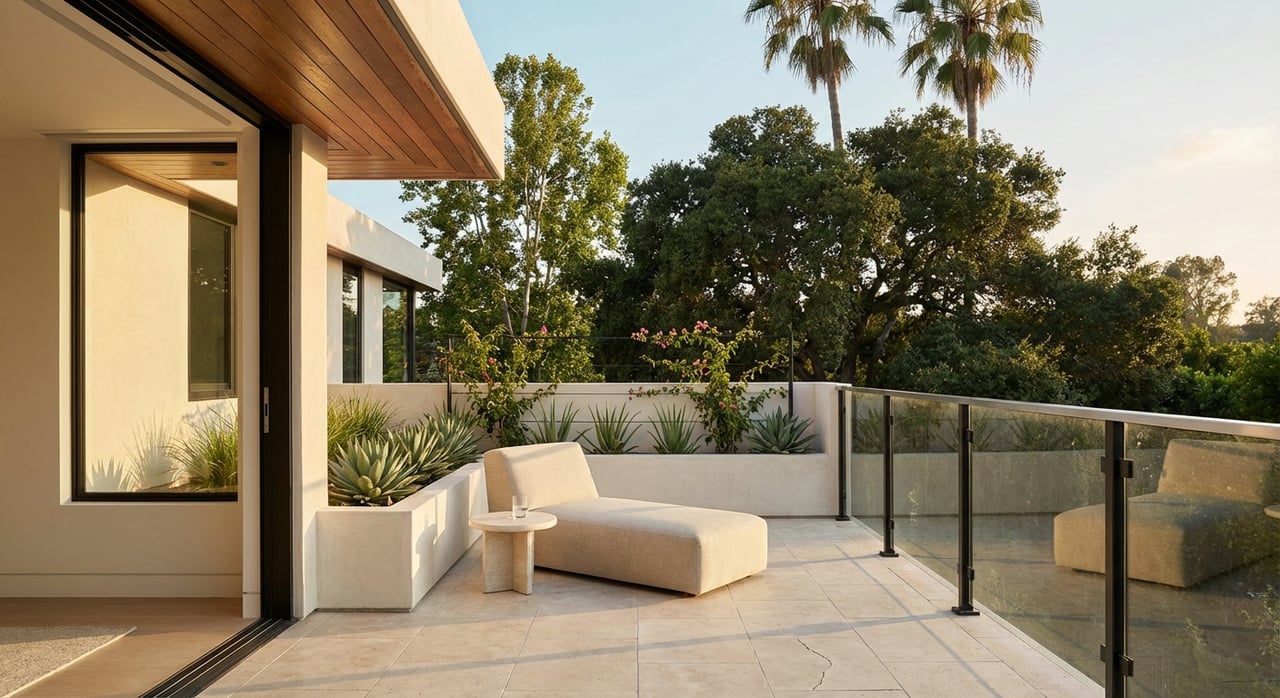
Understanding Woodland Hills View Home Values Today
You can feel it the moment you step onto a deck with sweeping city lights or a serene canyon backdrop. The question is not whether a view is valuable. It is how much the market will actually pay for it in Woodland Hills. If you are buying or selling, you need a clear way to separate romance from real dollars. In this guide, you will learn how appraisers, lenders, and local buyers treat views, what affects the premium, and a simple method you can use to price a view home with confidence. Let’s dive in.
Woodland Hills sits at the western edge of the San Fernando Valley with ridgelines, canyons, and golf fairways that create distinct sightlines. You will commonly see three categories: city or valley panoramas with night lights, canyon and greenbelt outlooks, and golf‑course views near Woodland Hills Country Club. These views show up across ZIP codes 91364 and 91367 and are often highlighted in listing remarks.
Not all views are equal. A framed sliver between trees is different from a full, unobstructed ridge panorama. Buyers also react to how you experience the view. A wide outlook from main living areas and the primary suite will carry more weight than a glimpse from a side window.
Woodland Hills is a high‑value market with median sale prices in the low to mid seven figures and a market pace that varies by neighborhood and price tier. Recent snapshots show a median around 1.13 million dollars and roughly two months on market. Price bands differ by sub‑neighborhood, so always compare like‑to‑like when judging a view premium within 91364 and 91367.
Appraisers lean on the sales comparison approach. They look for recent nearby sales that are similar to your property except for the view, then measure the price difference. Fannie Mae reminds appraisers to rate features like View and Location on an absolute basis and to document any adjustment with market data. You can read that guidance in the Fannie Mae Appraiser Update.
In practice, the best proof is a matched pair: two similar homes, one with the view and one without. The price gap becomes the view’s contributory value. If clean comps are thin, appraisers tend to be conservative.
Agents often translate view quality into percentage bands as a starting point, then calibrate with local sales. A simple framework many practitioners use looks like this: partial or framed views in the low single digits, clear canyon or golf‑fairway views in the high single to mid double digits, and panoramic ridge or skyline views that can extend into higher double digits where views are scarce. Academic work supports the idea that premiums vary widely by view type, distance, and local market. See the spatial hedonic overview on The Free Library for a plain‑English summary of this variability.
Hedonic pricing studies consistently find that scenic views have a positive effect on sale price, but the size of that effect shifts by setting and scarcity. In high‑value hillside markets, premiums can rise sharply for panoramic or protected outlooks. For a deeper dive into how researchers measure this, review the spatial analysis work on ResearchGate.
Use this five‑step process to estimate a fair, defensible premium. It works whether you are listing, buying, or preparing for an appraisal.
Create clear classes so you are comparing apples to apples:
Take timestamped photos from key rooms and the yard, including twilight if city lights are visible. Note orientation and focal points.
Pull recent closed sales within 0.5 to 1 mile and within the same ZIP, matched on size, bed/bath count, lot type, condition, and pool. Separate the set into view and non‑view sales by your classes. When possible, use matched pairs where the view is the main difference. For practical tips on this method, see WorkingRE’s guide to proving appraisal adjustments.
For each matched pair, compute the percent and dollar differences. Example: a non‑view home closes at 1,200,000 dollars and a similar view home closes at 1,320,000 dollars. The implied view premium is about 10 percent or 120,000 dollars. If you have several pairs, use the median to avoid outliers. With more data, a simple hedonic regression can also estimate an average percent premium, as shown in the ResearchGate analysis.
Before you assume the view holds its value, check for future obstructions and hazards. Use the City of Los Angeles tool, ZIMAS, to review nearby permits, zoning, and building envelopes that could allow a neighbor to build up. Hillside properties also carry wildfire considerations. The 2025 updates to fire hazard maps expanded mapped areas across Los Angeles County. See coverage of those changes in the Los Angeles Times report on new fire hazard maps. If risk is present, reduce the premium or document it as conditional.
Convert your result into a conservative and an optimistic scenario, then show your work. For instance, if your median matched pair indicates plus 10 percent and your non‑view base value is 1,200,000 dollars, present a range of 1,320,000 to 1,380,000 dollars depending on other amenities. Appraisers expect this kind of documentation, and it strengthens your negotiation.
In Woodland Hills, canyon and city‑lights views concentrate along the foothills near Mulholland and Serrania, while golf‑course outlooks cluster around Woodland Hills Country Club. Pockets within 91364 often show stronger elevation and broader sightlines, while 91367 has more basin‑level streets with selective vantage points. As always, verify within micro‑neighborhoods since blocks can change quickly on a hillside.
Certain factors can reduce or even negate a view premium. Be alert to:
A strong view can elevate your price, but only if buyers can see it and the appraiser can support it. Focus on:
A great view attracts competition. Keep these moves in your toolkit:
Treat these as working ranges. Always validate with recent, local paired sales.
On a 1,200,000 dollar base, a 10 percent premium equals 120,000 dollars. That is material to loan amounts and appraisal outcomes.
Compelling views often drive more listing clicks and stronger showing activity. That can shorten time on market when the price aligns with recent support. There is no fixed rule across all price tiers, and marketing quality still matters. For a look at how appraisers evaluate market response, review this practical rundown on pinning down value.
Views are a market‑driven amenity in Woodland Hills. The premium depends on view class, how you experience it in the home, and whether you can prove it with local sales and permanence checks. Use matched pairs as your backbone, present a price band, and plan for lender scrutiny in higher tiers. If you want help building a view‑pricing case or positioning your property to capture full value, schedule a private strategy call with Larry Calemine.

With more than 20 years of experience in the greater Los Angeles Real Estate market, Larry Calemine has the experience and vision necessary to ensure the successful completion of your next Real Estate transaction. Larry’s vast knowledge of the current market and strong negotiation skills will assure anyone the best possible experience.